Amerika!
The great thing about the New Yorker recently is that no matter what the subject-- whether it's a breezy shopping article by Patricia Marx or a multi-part essay about Ian Frazier's travels in Siberia-- it's really fun to read. Even when a story is hugely informative, reading it rarely feels like I'm eating my vegetables.
And that wasn't a hypothetical thing, the long Siberia travel essay. I actually read Part I last week. I especially liked Frazier's antecdote about how Siberia and America are similar in that they "both exist as constructs, expressions of the mind" to each other. You know how someone might say he parked "out in Siberia" if the only spot he could find was, say, four blocks from his apartment? It turns out being "in America" has a very definite connotation in Siberia, as well:
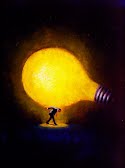
"The time was late evening; darkness had fallen. [An acquaintance and native of Siberia] led us from room to room, throwing on all the lights and pointing out the amenities. When we got to the kitchen, he flipped the switch but the light did not go on. This seemed to upset him. He fooled with the switch, then hurried off and came back with a stepladder. Mounting it, he removed the glass globe from the overhead light and unscrewed the bulb. He climbed down, put globe and bulb on the counter, took a fresh bulb, and ascended again. He reached up and screwed the new bulb into the socket. After a few twists, the light came on.
He turned to us and spread his arms wide, indicating the beams brightly filling the room. 'Ahhh,' he said, triumphantly. 'Amerika!'"
California here we come
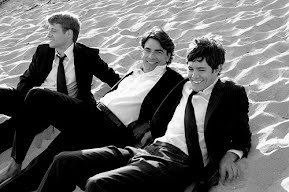
I'm here with a second annual helping of summertime nostalgia: Watching The O.C. with friends was prety much a staple of my otherwise TV-less college experience. Yes, the plotlines were silly and the actors were beautiful, but somehow The O.C. had just enough wit and emotional depth to feel a bit more substantial than other guilty pleasure TV shows.
Most importantly, with all its gorgeous shots of Coastal California, it played right into the excitement I felt during senior year about my then-upcoming move to the West Coast. And after more than 3 years, I still get a nervous, happy feeling when I hear the first notes to Phantom Planet's "California." Hey, media (and memory) can be a very powerful thing.
Anyway, I just came across this yesterday night and it made me irrationally, dumbfoundedly exuberant. For some reason, the fact that there's a blog called "FuckYeahTheOC" has made me love Tumblr.com, and, relatedly, our brilliant, crazy, funemployed media-saturated generation even more than I already did.
Eternal Spring of San Francisco
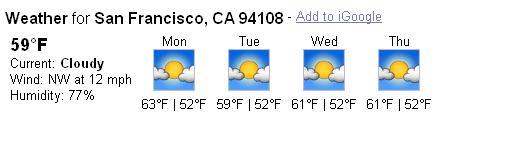
Yes, it's time to break out the sweaters and fire up the tea kettle for another typical San Francisco summer.
Mark Twain is often quoted as saying something like "the coldest winter I ever spent was a summer in San Francisco," but it turns out that's basically a myth. He did, however, once write of the "eternal Spring of San Francisco," which I think sounds much nicer, anyway.
Media parties and the vodka fizz
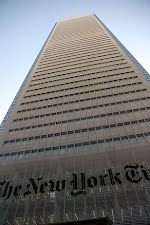
A lot of what New York Times reporter David Carr says in this interview about the state of the media is so true it's kind of sad. I saw some of the extravagance he mentions in my first amazing journalism gig in New York (at a magazine which has, incidentally, since folded.) I remember consciously trying to savor every fancy dinner, town car and nice hotel room, since for me, an entry-level 20-year-old, it all didn't really make sense.
But even when you know deep down that something is too good to be true, it's still upsetting when the inevitable end comes. It's starting to set in that the past 15 years have been an unsustainable anomaly for not just finance, but a lot of other industries too.
A particularly relevant excerpt of Carr's real talk:
"I think one thing that people do not understand is, as recently as four or five years ago, to be a member of Manhattan media, you weren't rich, but you lived as a rich person might. You went to the parties that a rich person would go to, you ate the food that a rich person would eat, you drank the vodka that a rich person would drink, and you'd end up in black cars, and you'd end up sometimes on boats and in helicopters.
"We lived as kings, and it convinced us, I think, that there was a significant underlying value to what we did. And I think we're finding out now that the real, actual value of journalism in the current economy is not that high."

